I was a gung-ho liberaliser when economic reforms began in 1991. At the time, a sceptical politician asked me which sectors would benefit most. I replied it was not possible to predict the winners. In that case, he sneered, why embark on a path with no destination.
The answer is clear today, now that India has averaged almost 9% economic growth for several years. This success required a path which, by design, had no destination. The reforms tore down the planned road and opened entry into a million possible roads, facilitating ideas that no planner had dreamed of.
Before 1991, no planner visualised a future economy excelling in computer software, business process outsourcing (BPO), R&D, or brain-intensive manufacturing. But deregulation plus global connectivity created a million new possibilities, and innovative risk-takers did the rest.
India is globally famous for computer software. Yet government policy hobbled this industry for decades. Narayana Murthy of Infosys says it took almost two years in the 1980s to get a telephone connection and a licence to import a computer. Politicians and trade unions opposed computerisation as a threat to jobs. The 1993 bank-union agreement, two full years after liberalisation, nevertheless provided for bank branch computerisation at just 0.5-1% per year, meaning full computerisation would take 200 years!
Without widespread computerisation, software engineers could not develop high skills locally. But Indians who went to the US became the whizz kids of Silicon Valley. “Body shopping” followed — foreigners hired Indians to work on software projects in the US. India’s software skills were honed in Silicon Valley and then shipped back. No planner could have planned this: it was the spontaneous outcome of enterprise and global connectivity
Similarly, no planner could have created BPO. Nobody predicted in 1990 that thousands of foreign companies would move back-office and technical services to India. General Electric was the first to experiment with the idea. It succeeded so well that MNCs galore followed suit.
Initially, companies thought only low-tech jobs could be outsourced, but Indians quickly graduated to the most skilled tasks. Moody’s and Standard and Poor’s took a long time to upgrade India’s credit rating to investment grade, yet have shifted some of their own rating operations to India.
India has become a global R&D hub. Here too, General Electric led the pack. Renault-Nissan is partnering Bajaj to make a small car that can beat Tata’s Nano. The R&D has been entrusted by the Franco-Japanese giant to Bajaj. India’s boom in brain-intensive manufacturing was unplanned. Most people thought India would follow the path of labour-intensive exports pioneered by East and South-East Asia. India failed dismally here, thanks mainly to rigid labour laws. But, to everyone’s surprise, India became world class in brain-intensive industries like pharma and automobiles.
Indian pharma is now a global player, and all top companies have become MNCs, acquiring companies across continents. This was made possible after India agreed to international patent rules, something the government opposed tooth and nail and was finally forced to accept in the Uruguay Round of 1995. This failure of planned strategy was the beginning of Indian success. Indian pharma companies initially feared they would be wiped out, but soon found that integrating with the global economy was an opportunity, not a threat.
The auto industry has become world-class. Why? Auto companies need constant new models and improvements to compete. Auto MNCs in India found that Indian engineers could do this quickly and cheaply. An auto component giant like Delphi takes three months to go from a new concept to prototype to commercial production. Bharat Forge claims it can do this in one month. Such skills have made it global No 2 in auto forgings.
When the economy opened up in 1991, many predicted that Indian companies would go bust or be taken over by MNCs. Nobody dreamed that one day Tata Steel would take over Corus, which was six times as big; or that Tata Motors would acquire Jaguar and Land Rover; or that Hindalco would take over Novellis, which was several times its size.
How did Indian minnows take over global whales? By borrowing massively from abroad. But such massive borrowing was prohibited by government policy till recently. The curbs aimed to thwart irresponsible borrowing. No planner realised that the curbs also thwarted Indian takeovers of global giants. The government has long discouraged private initiatives in education, and education for profit is banned. Supposedly non-profit private engineering colleges have come up, often owned by politicians, and often collecting illegal fees under the table. Their educational standards are spotty at best. Yet, these unplanned colleges, warts and all, have driven brain-intensive manufacturing. Government colleges produce only 45,000 engineers a year. Private colleges produce nine times as many. For decades, telecom was a government monopoly. In the 1980s, the government vetoed proposals for cellphones, saying they were a rich man’s toy. No planner anticipated that after liberalisation in the 1990s, cellphones would be bought by everybody from rural shopkeepers to urban carpenters. Nobody foresaw that Indian companies would create the cheapest calls in the world, attracting 8-10 million new subscribers per month. No planner saw any comparative advantage in wind energy. Indian wind speeds are generally low. Yet Tulsi Tanti, a textile manufacturer, launched Suzlon to make windmills. He is now world No 5 in windmills. Essel Propack has become the world’s top producer of laminated plastic tubes (for toothpaste, drugs and cosmetics). Nobody planned this. Subhash Chandra, a rice merchant, was looking at an international fair for plastic packaging for rice. The plastics dealers told him, by the way, that laminated plastics were replacing aluminium tubes for toothpaste. This accidental discovery helped transform Chandra from humble rice trader to world No 1 in laminated tubes.
One of my favourite posters says, “Some people look at things as they are, and ask why. But I dream of things that never were, and ask why not.” India has succeeded by becoming a place where people can think of things that never were, ask why not, and then just do it...
Cheers till next time !
Wednesday, June 18, 2008

Sunday, June 15, 2008
Upsetting Oil Pricing Conundrum in India
Indian Oil Corporation (IOC) calculates inter alia the landed import duty paid price of petrol and diesel every fortnight. This calculation is based on a formula that is linked to international prices. IOC’s landed price of petrol in Mumbai for the second fortnight of May was, for instance, Rs 38.1 per litre and for diesel Rs 48.8 per litre. The marketing companies had to, in other words, pay this amount to the refiners to buy the products. Next, the Central government imposes an excise and educational cess on the purchase cost. In May, this was Rs 14.4 per litre and Rs 0.4 per litre for petrol and Rs 4.6 per litre and Rs 0.1 per litre for diesel respectively. The total cash required by the marketing companies to purchase petrol and diesel in May was, therefore, Rs 52.9 per litre for petrol and Rs 53.6 per litre for diesel. The companies then sell these products at the ministry of petroleum mandated price of Rs 49.7 per litre for petrol and Rs 35.6 per litre for diesel (Mumbai prices). As such, they lose Rs 3.2 and Rs 18 for every litre of petrol and diesel sold respectively.
That, however, is not their total loss. They have to also pay sales tax to the state governments. In Mumbai, this tax is Rs 10.6 per litre and Rs 7.1 per litre for petrol and diesel respectively. Thus, the total cash loss suffered on account of the sale of 1 litre in Mumbai is Rs 13.7 and Rs 25.1 for petrol and diesel respectively. This is, in other words, the amount by which prices would have to be increased at the retail outlet for the companies to simply break even on a cash basis. Such a hike is, of course, out of the question.
Many in the public domain believe that the imbalance can be redressed by reducing the central and local taxes to make the public sector oil companies profitable. However, it is actually not about reducing the taxes to bring the prices down. That is just an indirect way of maintaining the subsidies. On one hand, the balance sheets of the oil companies might look healthier and higher profits might allow theme to disburse handsome dividends. On the other hand, the government revenues would come down and higher revenue deficits will bring the finance ministry into the FRBM dragnet. It is not a Morton’s fork but a Hobson’s choice for the government — to link the retail rates of petroleum products with the market rates.
In case of most other commodities, the high consumer price checks demand. This helps restore the supply-demand balance. As prices are not linked to the rising market rates, oil demand is not checked commensurate with the price change. It obviously creates an asymmetry in the supply-demand balance and can be only restored at much higher prices. By then, it might be already too late for the Indian economy.
Now let us look at two sensible, yet asynchronous, viewpoints on resolving this pricing conundrum. In the same piece, I prescribe the policy framework for a comprehensive petroleum policy. First, we should accept that high oil prices are here to stay. This does not mean we will not see sharp declines from present levels. What it does mean is that we will not see prices stabilising at levels significantly below a triple digit number. Second, we must create a mechanism that leads to a ‘graduated’ reduction in subsidies, an orderly alignment of domestic prices to international levels and a more efficient disbursement of financial support to the poor. Third, we must reverse ‘dieselisation’. And finally, we must recognise that the sine qua non of energy security is a robust and competitive domestic petroleum and energy sector.
One can only wonder if Rs 200,000 crore in oil subsidies, nearly 2% of India’s GDP, is not alarming enough for the government to pay heed to such sensible opinions.
Till next time, I better fuel up my tank before another bombshell price hike occurs !!!
That, however, is not their total loss. They have to also pay sales tax to the state governments. In Mumbai, this tax is Rs 10.6 per litre and Rs 7.1 per litre for petrol and diesel respectively. Thus, the total cash loss suffered on account of the sale of 1 litre in Mumbai is Rs 13.7 and Rs 25.1 for petrol and diesel respectively. This is, in other words, the amount by which prices would have to be increased at the retail outlet for the companies to simply break even on a cash basis. Such a hike is, of course, out of the question.
Many in the public domain believe that the imbalance can be redressed by reducing the central and local taxes to make the public sector oil companies profitable. However, it is actually not about reducing the taxes to bring the prices down. That is just an indirect way of maintaining the subsidies. On one hand, the balance sheets of the oil companies might look healthier and higher profits might allow theme to disburse handsome dividends. On the other hand, the government revenues would come down and higher revenue deficits will bring the finance ministry into the FRBM dragnet. It is not a Morton’s fork but a Hobson’s choice for the government — to link the retail rates of petroleum products with the market rates.
In case of most other commodities, the high consumer price checks demand. This helps restore the supply-demand balance. As prices are not linked to the rising market rates, oil demand is not checked commensurate with the price change. It obviously creates an asymmetry in the supply-demand balance and can be only restored at much higher prices. By then, it might be already too late for the Indian economy.
Now let us look at two sensible, yet asynchronous, viewpoints on resolving this pricing conundrum. In the same piece, I prescribe the policy framework for a comprehensive petroleum policy. First, we should accept that high oil prices are here to stay. This does not mean we will not see sharp declines from present levels. What it does mean is that we will not see prices stabilising at levels significantly below a triple digit number. Second, we must create a mechanism that leads to a ‘graduated’ reduction in subsidies, an orderly alignment of domestic prices to international levels and a more efficient disbursement of financial support to the poor. Third, we must reverse ‘dieselisation’. And finally, we must recognise that the sine qua non of energy security is a robust and competitive domestic petroleum and energy sector.
One can only wonder if Rs 200,000 crore in oil subsidies, nearly 2% of India’s GDP, is not alarming enough for the government to pay heed to such sensible opinions.
Till next time, I better fuel up my tank before another bombshell price hike occurs !!!
Wednesday, July 04, 2007
Your Guide To Becoming The Ultimate DJ
Hi guys and girls...Its been a while since I posted....was a lil busy with my final yr exams.....so finally im done with them....
This post is up on public demand with many folks askin me to give them some tips and info on the basics of DJ'ing. So here it is a lil warm up for u to get into this field which offers u fame as well as a chance to earn a quick buck...but always remember there is a lot of hardwork which goes in the making of mixes. My guru's well they have been supporting me all this while...I love mixes by DJ Tiesto, Paul Van Dynk, DJ Aqeel For the unusual sounds ;) and also DJ Suketu....and my close buddy DJ Tarun...whoz name i always write for the help hez given me all this while. So lets begin...
Here in you'll learn how to set up your DJ equipment, add components, use different types of DJ equipment, how to mix, advanced beat mixing and beat making and more..
For the beginner DJ it can be a bit much to take on the wild world of DJing when you don't have a clue and even if you do you may be skeptical of spending so much money for something you may only do as a hobby. I put together some DJ gear tips to help ease your mind
There first thing you need to ask your self is how or in what capacity will I be using my DJ equipment? How much do I want to spend? Where will I buy all of this DJ equipment, and most importantly what DJ equipment do I need? I have DJ equipment tips to answer all of these questions and more.
Say you want to be an all-purpose DJ. Meaning you want to be able to be a club DJ and battle DJ. You allowed your self a budget of $600. (INR 24,000/-).But let me make this perfectly clear. There is no substitute for high end high quality DJ equipment. You'll only be kidding yourself if you think you can go pro on cheaper DJ equipment. If you want to pick it up as a hobby then this is a good place to start.
Two DJ turntables - Remember you need DIRECT-DRIVE turntables. They offer the best torque for cueing records. The Stanton T.60 Direct Drive Turntable has enough power to get you started.
One DJ mixer - Break in your mixer slowly. Learn all of its features to maximize you DJ skills as you build them. Later on you should try experimenting cutting the music in and out with different mixer settings. Try to develop your own unique style. As I mentioned before the reason why CD players have caught on is because of the versatility. Because they are digital they not only play music CDs but they also play MP3s. So if you have MP3s you have virtually doubled your arsenal of DJ music.
If you're a Mobile DJ you can have pre made mixes to play at your gigs while you sit back and eat and drink your way to a nice pay day. Because they're so small and light they are very portable. Which means instead of lugging around heavy turntables and crates of records you can cut your load by 2/3 while increasing your DJ music library not to mention saving time and money.
Having a set of Pro DJ CD players is a must for every Mobile DJ and an option for the Club DJ because Clubs still rely on vinyl. Before you purchase your first set you need to keep some things in mind.
1. Does it play MP3s and regular music CDs and CDRWs?
2. Does it have real time scratch capability?
3. Does it feel like you are spinning vinyl?
4. Can you cue the next track while the current one is playing?
5. Is there pitch control like a DJ turntable?
6. Is it shock proof?
7. Does it have memory points to save your cues of your favorite CDs?
8. Is there an S/PDIF digital output?
9. Is there a sampler and loop function?
10. Also, being able to burn a CD is always nice.
These are the basic features you need in any DJ CD player you purchase
One pair of DJ headphones - So now you have your turntables, your mixer, your amp and speakers. But you missed one small but crucial detail, headphones. There are ample number of headphones for DJs from Sony, Pioneer, and Technics which will help guide you in making the right decision.
Headphones have one important function. They help the DJ mix the beats together seamlessly. By monitoring one turntable in the headphones while the other turntable is playing for the crowd you can get the proper mix and proper transition from one table to the next.
There are a lot of people who would still like to lay their hands on the various softwares available.....so guys some useful info for you too....
DJ Software Programs - DJ software may be your answer if you don't have the money to spend on DJ equipment but you do own a fancy computer. You can become a DJ in the digital world with a little time and a little creativity. Creating DJ music on your pc can be fun.
Software for DJs is abundant. There are so many to choose from it's hard to tell who's who and each one has a specific purpose. Depending on your application, you can DJ using a laptop with Final Scratch, or create remixes with Cakewalk or master with Sound Forge. DJ software that is in-expensive could be your answer for recording and mastering that final mix. It will show you what you need to record and how to choose the right software. DJ software is not difficult to learn. I find that experimenting works best initially that way you get to learn where everything is and how it works.
After you get to understand how it works you should join a message board where other users post helpful information and documents to help you be more productive.
Fruity Loops is another DJ software program that is in high demand. The best thing about Fruity Loops is its ability to emulate so many of those famous sounds you hear from old school 70's artists to today's artists.
Sony Media Sound Forge v8.0 - Sound Forge by Sonic Foundry. For the price this DJ software is one of the best solutions on the market for editing music and mastering your final mix. Sound Forge offers its users the ability to easily create and edit music with a few simple clicks of the mouse. I have been using Sound Forge for a few years now and I have no complaints. It has a wide range of effects and processors and the help section has come in handy as well. It's a very user friendly product.
Traktor mp3 DJ - The Traktor mp3 DJ software program is another great product for up and coming DJs. It offers beat matching, pitch features and loop. A good package overall.
So I hope this tutorial will guide u for becoming a DJ. So get a funky beat and and cool song...and jus mix !
Happy mixing !
Hi guys and girls...Its been a while since I posted....was a lil busy with my final yr exams.....so finally im done with them....
This post is up on public demand with many folks askin me to give them some tips and info on the basics of DJ'ing. So here it is a lil warm up for u to get into this field which offers u fame as well as a chance to earn a quick buck...but always remember there is a lot of hardwork which goes in the making of mixes. My guru's well they have been supporting me all this while...I love mixes by DJ Tiesto, Paul Van Dynk, DJ Aqeel For the unusual sounds ;) and also DJ Suketu....and my close buddy DJ Tarun...whoz name i always write for the help hez given me all this while. So lets begin...
Here in you'll learn how to set up your DJ equipment, add components, use different types of DJ equipment, how to mix, advanced beat mixing and beat making and more..
For the beginner DJ it can be a bit much to take on the wild world of DJing when you don't have a clue and even if you do you may be skeptical of spending so much money for something you may only do as a hobby. I put together some DJ gear tips to help ease your mind
There first thing you need to ask your self is how or in what capacity will I be using my DJ equipment? How much do I want to spend? Where will I buy all of this DJ equipment, and most importantly what DJ equipment do I need? I have DJ equipment tips to answer all of these questions and more.
Say you want to be an all-purpose DJ. Meaning you want to be able to be a club DJ and battle DJ. You allowed your self a budget of $600. (INR 24,000/-).But let me make this perfectly clear. There is no substitute for high end high quality DJ equipment. You'll only be kidding yourself if you think you can go pro on cheaper DJ equipment. If you want to pick it up as a hobby then this is a good place to start.
Two DJ turntables - Remember you need DIRECT-DRIVE turntables. They offer the best torque for cueing records. The Stanton T.60 Direct Drive Turntable has enough power to get you started.
One DJ mixer - Break in your mixer slowly. Learn all of its features to maximize you DJ skills as you build them. Later on you should try experimenting cutting the music in and out with different mixer settings. Try to develop your own unique style. As I mentioned before the reason why CD players have caught on is because of the versatility. Because they are digital they not only play music CDs but they also play MP3s. So if you have MP3s you have virtually doubled your arsenal of DJ music.
If you're a Mobile DJ you can have pre made mixes to play at your gigs while you sit back and eat and drink your way to a nice pay day. Because they're so small and light they are very portable. Which means instead of lugging around heavy turntables and crates of records you can cut your load by 2/3 while increasing your DJ music library not to mention saving time and money.
Having a set of Pro DJ CD players is a must for every Mobile DJ and an option for the Club DJ because Clubs still rely on vinyl. Before you purchase your first set you need to keep some things in mind.
1. Does it play MP3s and regular music CDs and CDRWs?
2. Does it have real time scratch capability?
3. Does it feel like you are spinning vinyl?
4. Can you cue the next track while the current one is playing?
5. Is there pitch control like a DJ turntable?
6. Is it shock proof?
7. Does it have memory points to save your cues of your favorite CDs?
8. Is there an S/PDIF digital output?
9. Is there a sampler and loop function?
10. Also, being able to burn a CD is always nice.
These are the basic features you need in any DJ CD player you purchase
One pair of DJ headphones - So now you have your turntables, your mixer, your amp and speakers. But you missed one small but crucial detail, headphones. There are ample number of headphones for DJs from Sony, Pioneer, and Technics which will help guide you in making the right decision.
Headphones have one important function. They help the DJ mix the beats together seamlessly. By monitoring one turntable in the headphones while the other turntable is playing for the crowd you can get the proper mix and proper transition from one table to the next.
There are a lot of people who would still like to lay their hands on the various softwares available.....so guys some useful info for you too....
DJ Software Programs - DJ software may be your answer if you don't have the money to spend on DJ equipment but you do own a fancy computer. You can become a DJ in the digital world with a little time and a little creativity. Creating DJ music on your pc can be fun.
Software for DJs is abundant. There are so many to choose from it's hard to tell who's who and each one has a specific purpose. Depending on your application, you can DJ using a laptop with Final Scratch, or create remixes with Cakewalk or master with Sound Forge. DJ software that is in-expensive could be your answer for recording and mastering that final mix. It will show you what you need to record and how to choose the right software. DJ software is not difficult to learn. I find that experimenting works best initially that way you get to learn where everything is and how it works.
After you get to understand how it works you should join a message board where other users post helpful information and documents to help you be more productive.
Fruity Loops is another DJ software program that is in high demand. The best thing about Fruity Loops is its ability to emulate so many of those famous sounds you hear from old school 70's artists to today's artists.
Sony Media Sound Forge v8.0 - Sound Forge by Sonic Foundry. For the price this DJ software is one of the best solutions on the market for editing music and mastering your final mix. Sound Forge offers its users the ability to easily create and edit music with a few simple clicks of the mouse. I have been using Sound Forge for a few years now and I have no complaints. It has a wide range of effects and processors and the help section has come in handy as well. It's a very user friendly product.
Traktor mp3 DJ - The Traktor mp3 DJ software program is another great product for up and coming DJs. It offers beat matching, pitch features and loop. A good package overall.
So I hope this tutorial will guide u for becoming a DJ. So get a funky beat and and cool song...and jus mix !
Happy mixing !
Friday, June 08, 2007
Make your own Powered Model Airplane!!!!
Here is the Steps how to Build your own Airplane at no COST!!!! Enjoy

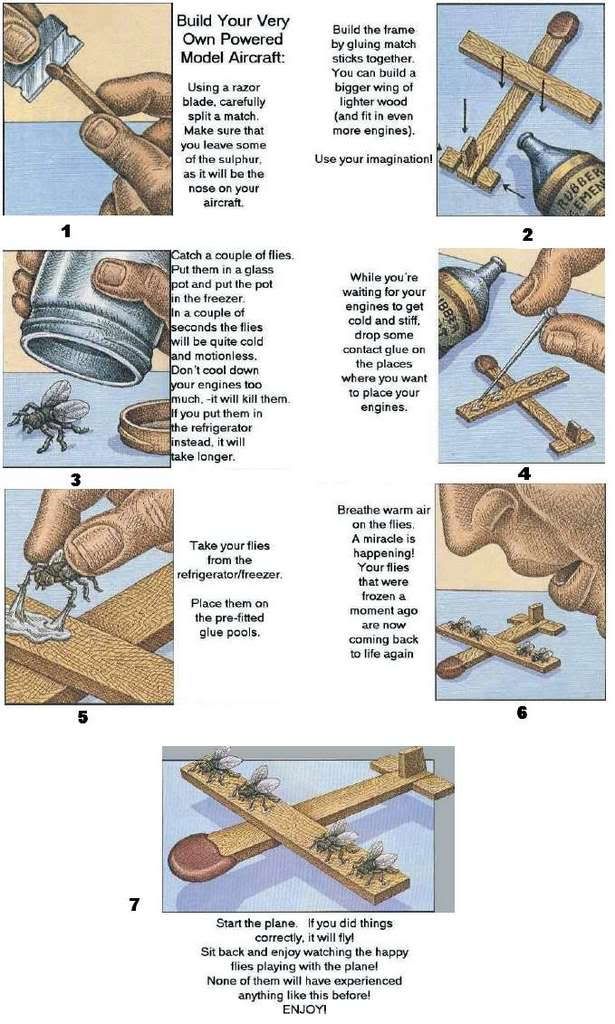
Tuesday, May 29, 2007

Friday, May 25, 2007
Equations for life
SSC + HSC + BTech + MBA = UNEMPLOYMENT
An Idea + An Idiot = A Dot com
One Chinese gymnast = India's Gold Medal tally since 1896
Sushmita Sen - 1.2 feet = Salman Khan
Special Effects in Shampoo ads = Special effects in Jurassic park.
4 weeks in Switzerland + London + New Zealand + Canada = a 4 minute song in Hindi movie.
Ajay Devgan + cosmetic surgery + acting ability + personality + own production company = Kajol..
Rona dhona x Bewafai x Badle ki aag = Your mum's favorite serials.
Amitabh Bachchan + Jaya Bachchan - Talent = Abhishek Bachchan
Any actor + Any actress + many movies = David Dhawan
1 smile + 32 teeth = Govinda
1 person - shirt = Salman Khan
1 person + straight hair + un-straight walk = Sanjay Dutt
1 hand + 10 kg weight = Sunny Deol
One engagement + Two weddings + Three wedding songs + Four hundred Relatives + A house bigger than Buckingham Palace = One Sooraj Barjataya Film
Reading mails all the time + no replies = Silence of the Lamb!
Software Engineer, Qualified Employee + No Work = Forwards
I hope you enjoyed this post...so do comment...Well, till next time fasten ur seatbealts as there is a whole lot more to come...only at DJ Prasad's Blog !
An Idea + An Idiot = A Dot com
One Chinese gymnast = India's Gold Medal tally since 1896
Sushmita Sen - 1.2 feet = Salman Khan
Special Effects in Shampoo ads = Special effects in Jurassic park.
4 weeks in Switzerland + London + New Zealand + Canada = a 4 minute song in Hindi movie.
Ajay Devgan + cosmetic surgery + acting ability + personality + own production company = Kajol..
Rona dhona x Bewafai x Badle ki aag = Your mum's favorite serials.
Amitabh Bachchan + Jaya Bachchan - Talent = Abhishek Bachchan
Any actor + Any actress + many movies = David Dhawan
1 smile + 32 teeth = Govinda
1 person - shirt = Salman Khan
1 person + straight hair + un-straight walk = Sanjay Dutt
1 hand + 10 kg weight = Sunny Deol
One engagement + Two weddings + Three wedding songs + Four hundred Relatives + A house bigger than Buckingham Palace = One Sooraj Barjataya Film
Reading mails all the time + no replies = Silence of the Lamb!
Software Engineer, Qualified Employee + No Work = Forwards
I hope you enjoyed this post...so do comment...Well, till next time fasten ur seatbealts as there is a whole lot more to come...only at DJ Prasad's Blog !
Thursday, May 24, 2007
Welcome
This is my first post on my newly created blog. Do let me know what all you would like to know and I shall try my best to help you..
Till Next time....
Happy Browsing.
~DJ Prasad~
Till Next time....
Happy Browsing.
~DJ Prasad~
Subscribe to:
Posts (Atom)


 Posts
Posts

